IMAGO ANIMA
The work of Dubravka Lošić is shaped by a persistent preoccupation with painting as a place where matter, memory, and inner experience converge. Over time, her works have moved away from any traditional notion of pictorial representation, turning instead toward a materially dense, closed surfaces in which the personal and the collective, the visible and the concealed, are intertwined. It is within this context that the Imago Anima series marks a phase in which the artist’s painterly practice reaches towards the execution of compact, unified whole, one in which the distinction between figure and ground dissolves, and meaning is generated from within the work’s own internal structure.
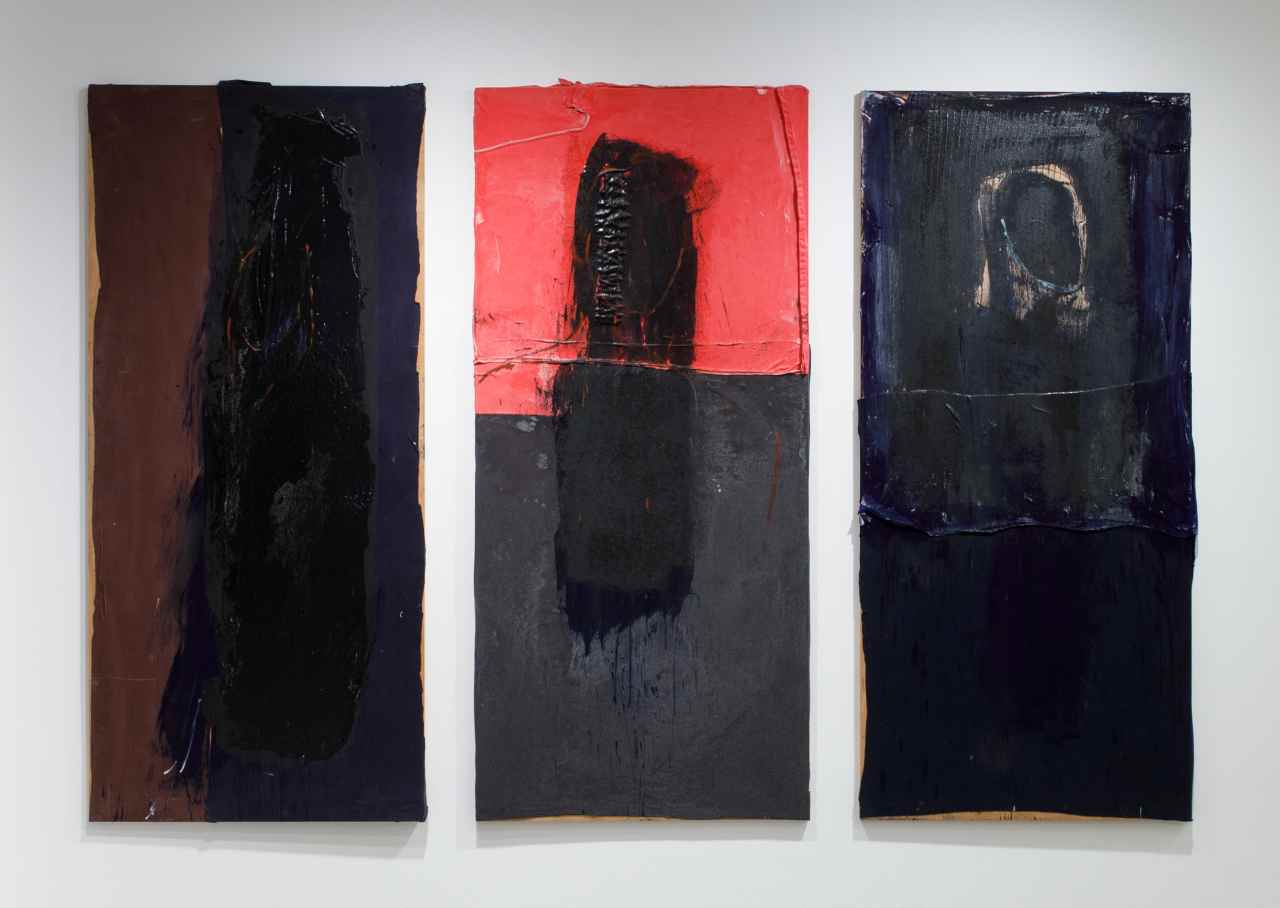
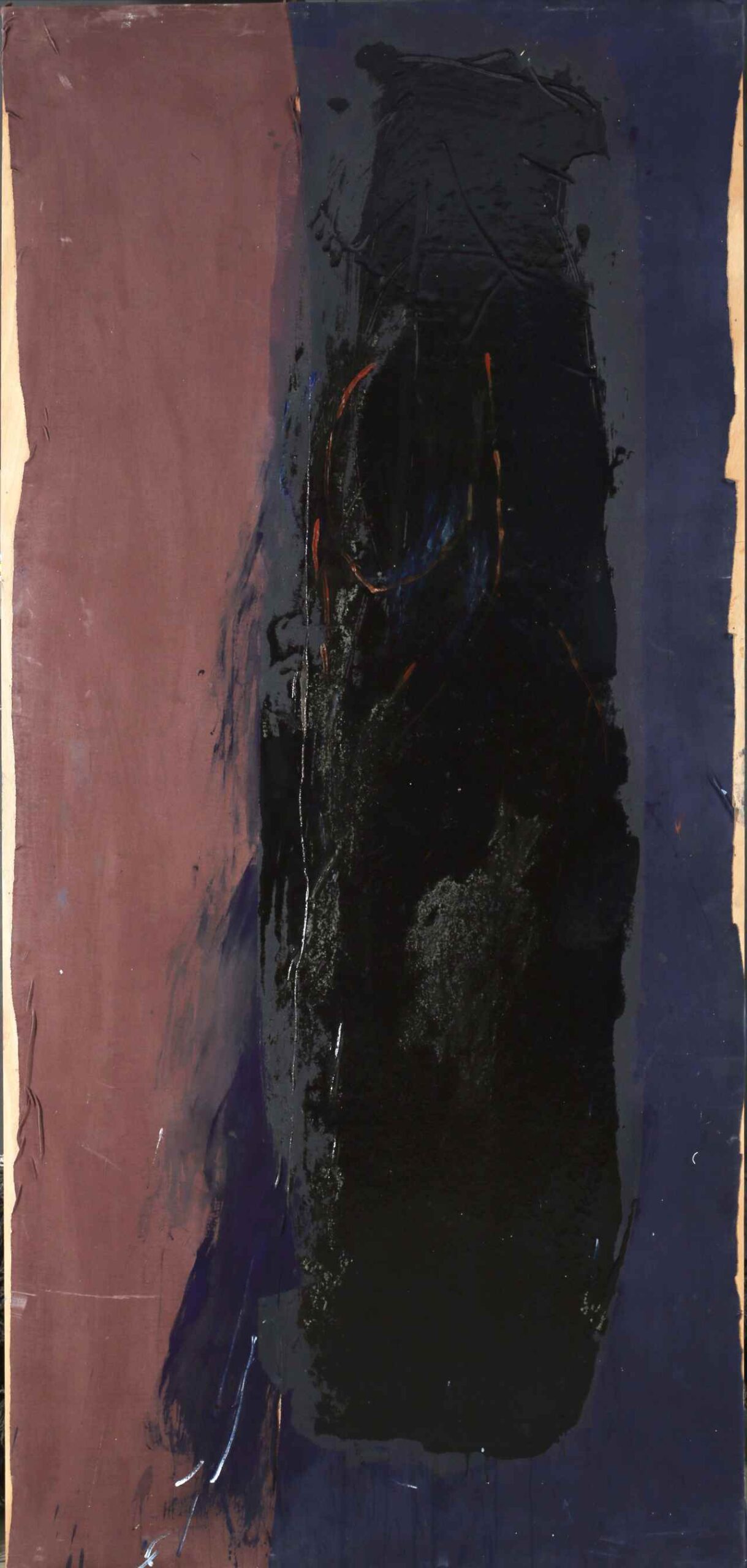
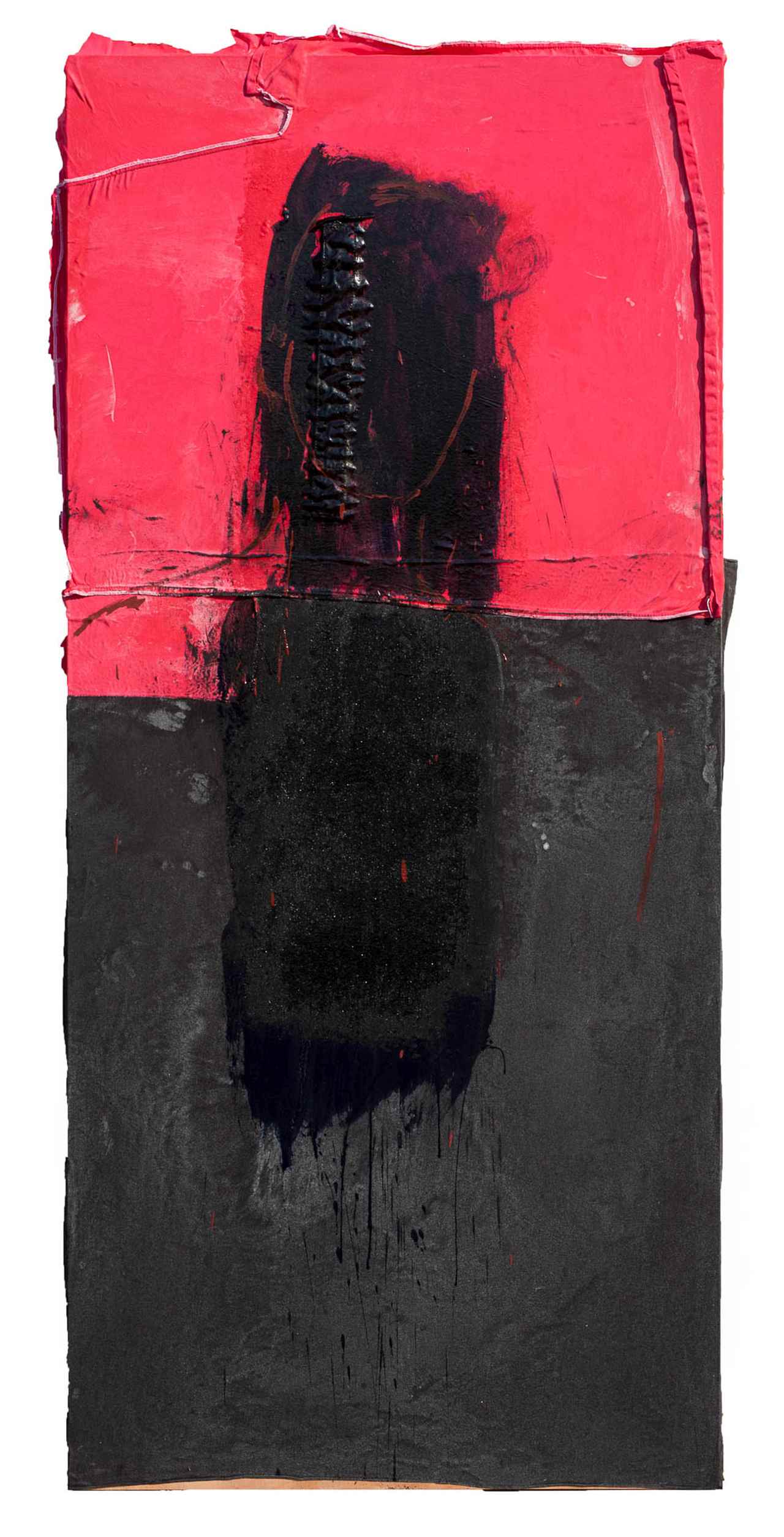
These portraits, rendered in mixed media of acrylic, pigment, and resin on okoumé plywood panels, reach back to the ancient Egyptian origins of easel painting and to the tradition of encaustic, with a particular emphasis on the relief and tactile qualities of the surface. The title of the cycle evokes the “image of the soul” as something inscribed within the very pictorial matter. Tall, upright formats and frontally positioned figures accentuate both their presence and a sense of distance, as the figure that is confined to the material of its representation is reduced to the essential contours of head, neck, and shoulders. Individual characteristics are distilled into a sign, identity condensed to initials, and composition devoted entirely to the articulation of interior states.
Echoing the aesthetic of Art Informel, pigment is rubbed and compacted into a dense, closed surface with a pronounced relief quality, in which gesture is transformed into a process of saturation and layering, while the traces of the working process remain legible, and the accumulated deposits of material occasionally rupture and bleed towards the exposed ground at the edges of the composition. The painted surface functions as a thick membrane from which the figure emerges only in fragments, without any stable foothold within the pictorial space, whilst light lingers on the surface, coaxing contours into view at the very edge of perception. The presence of those portrayed remains unstable: they surface from the matter only to recede back into it, held in suspension between appearance and disappearance. The portrait thus abandons its role as likeness and reconstitutes itself as a site of inner projection.
The cycle develops across two temporally distinct periods, yet is bound by a shared conceptual logic, forming a coherent body of research rooted in the artist’s long-standing interest in introspection, materiality, and the spiritual dimensions of artistic work. The first phase (1995–1997) establishes the cycle’s core concerns through the reduction of the figure and a sustained focus on interior states, whilst the subsequent reactivation of the cycle (2012–2013), exhibited at Palazzo Zorzi, carries these foundations further, giving rise to a more fully elaborated spatial and ambient articulation. Throughout this process, the work gradually frees itself from any strictly representational function and affirms itself as a self-sufficient structure.
Luciana Fuks