Rains Paris and Alba Albula
Although executed in succession, the Rains Paris and Alba Albula cycles form a conceptually and formally connected pair within Dubravka Lošić’s body of work. The two series are rendered in opposing achromatic registers, black first, then white, yet both derive from an identical working methodology, and each is underpinned by the same governing idea: that of the artwork as a site of arrested transformation and quiet tension between what lies hidden and what faintly surfaces from beneath.
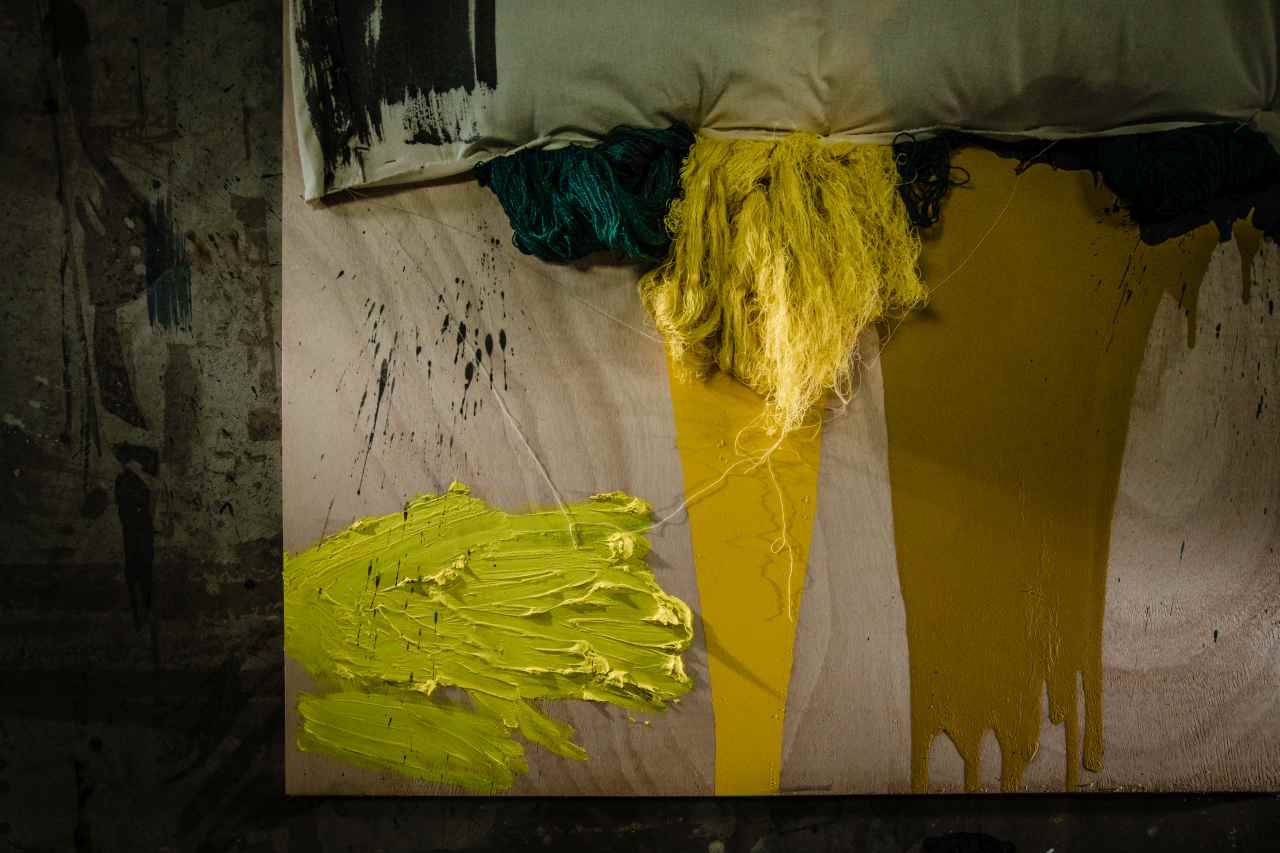
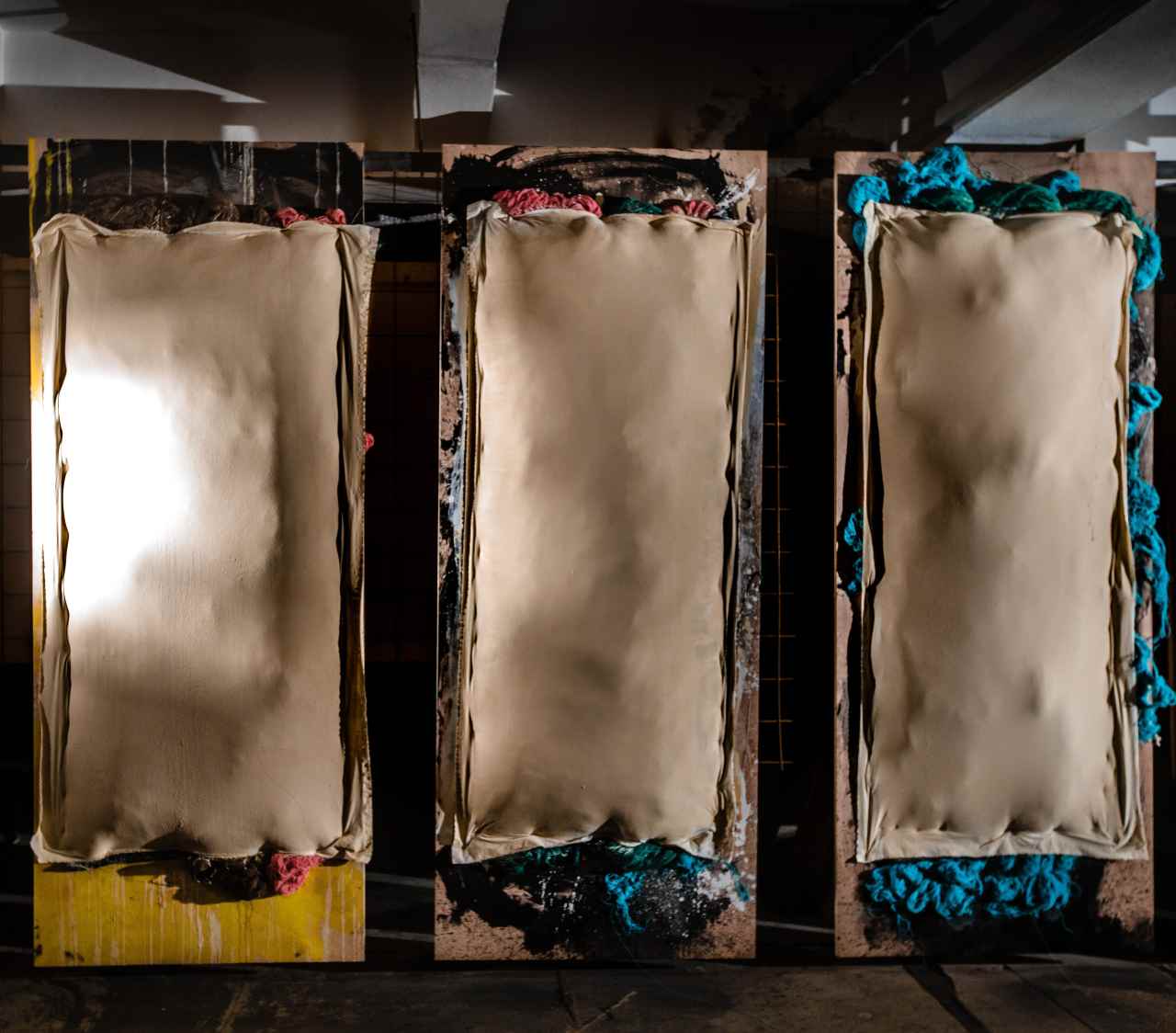
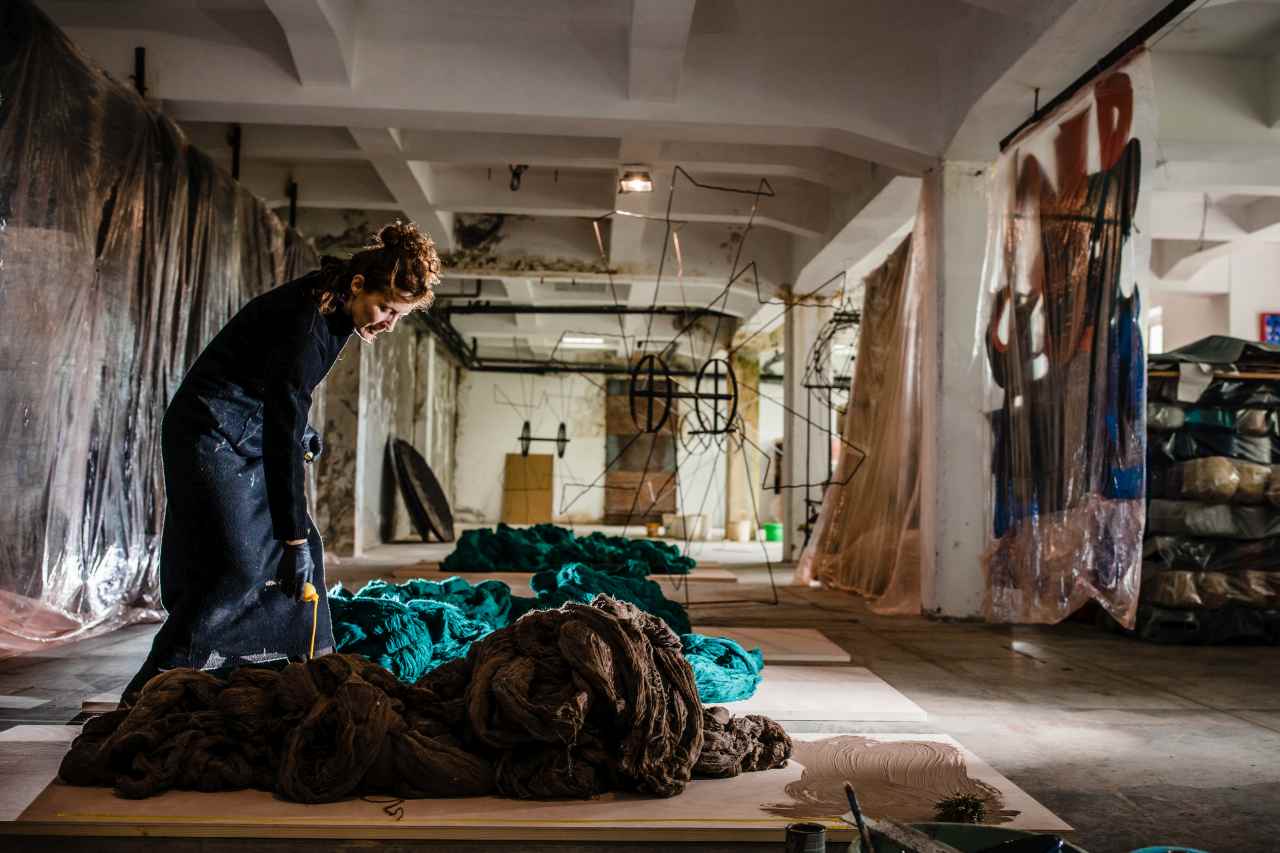
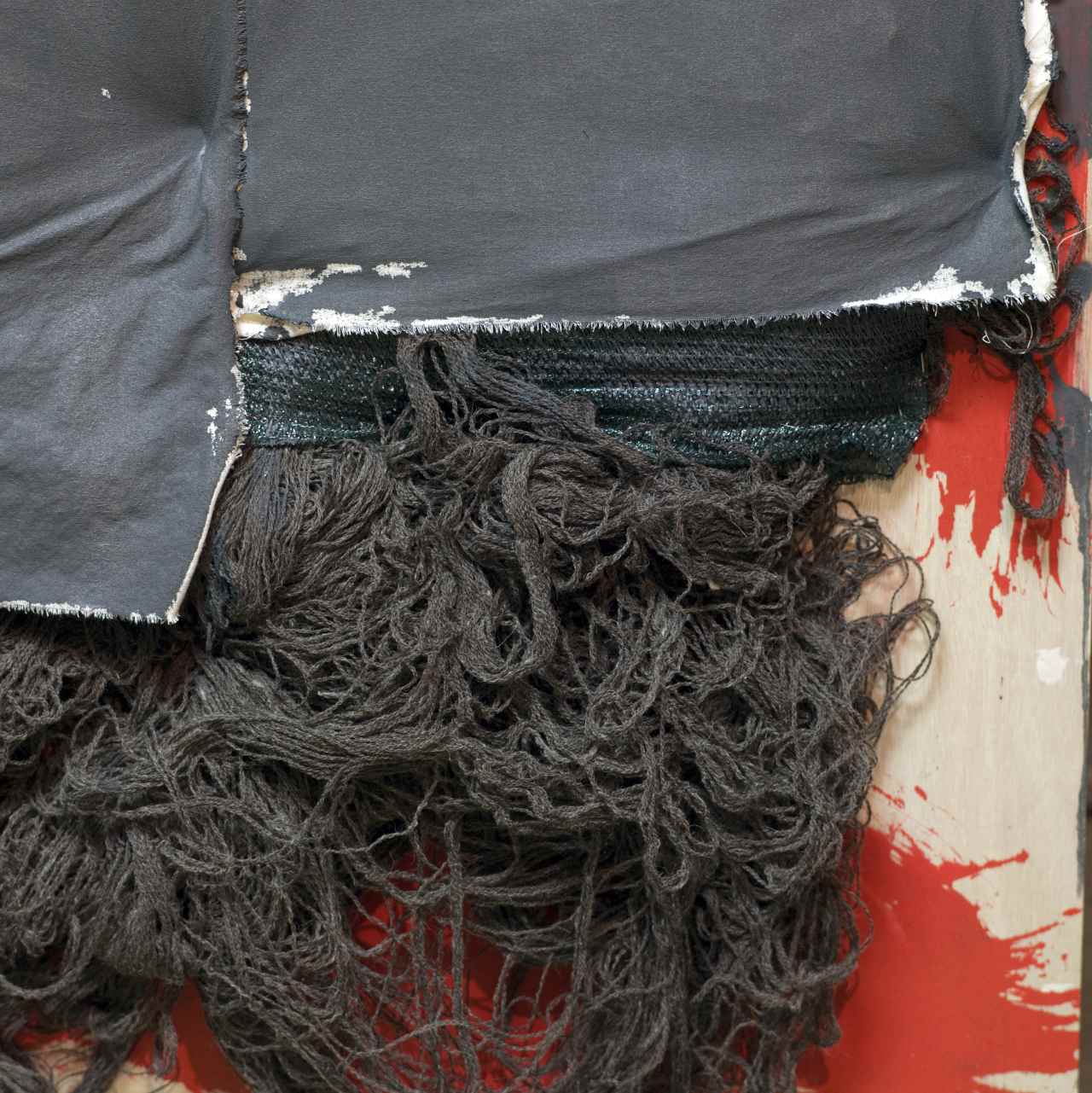
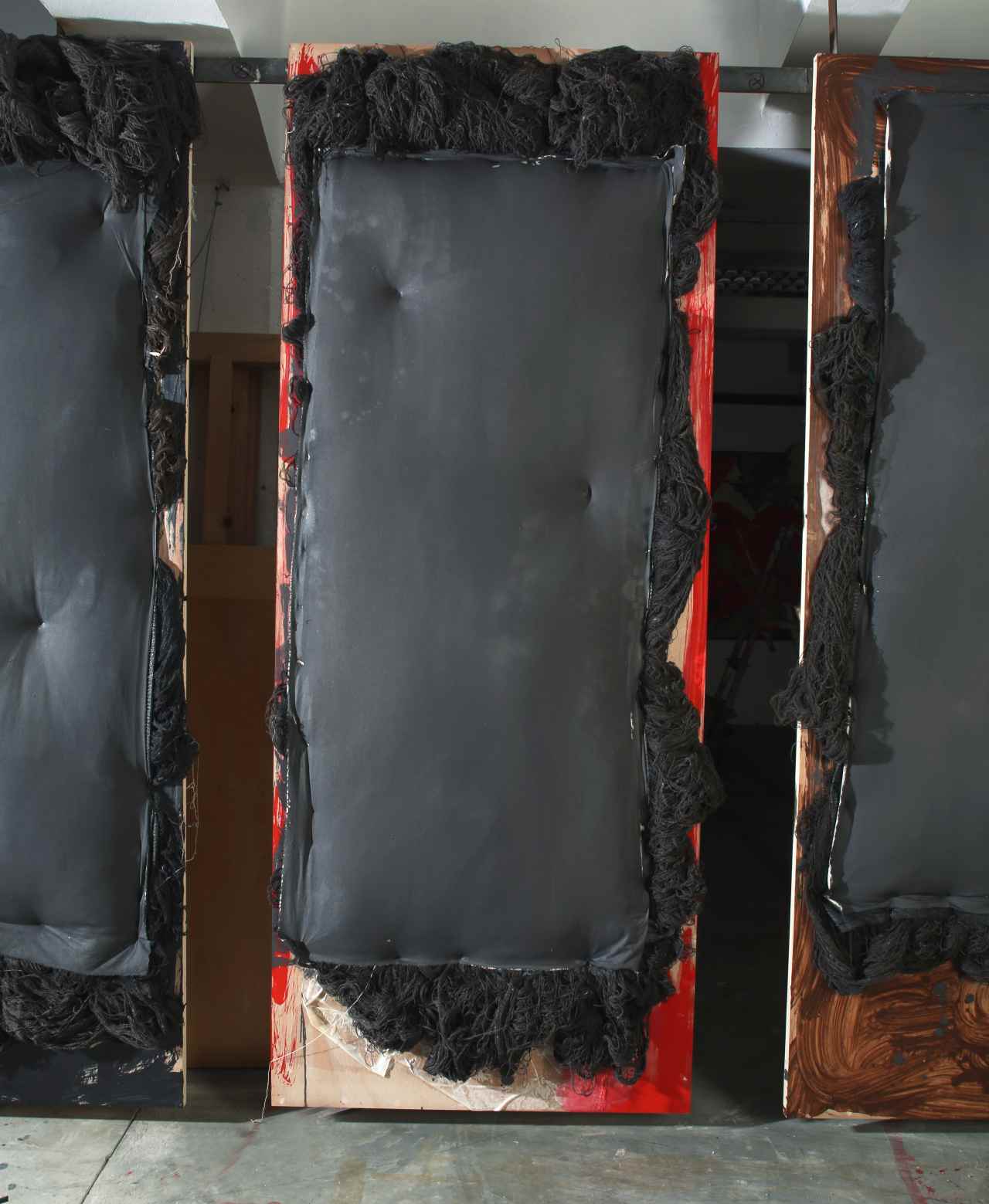
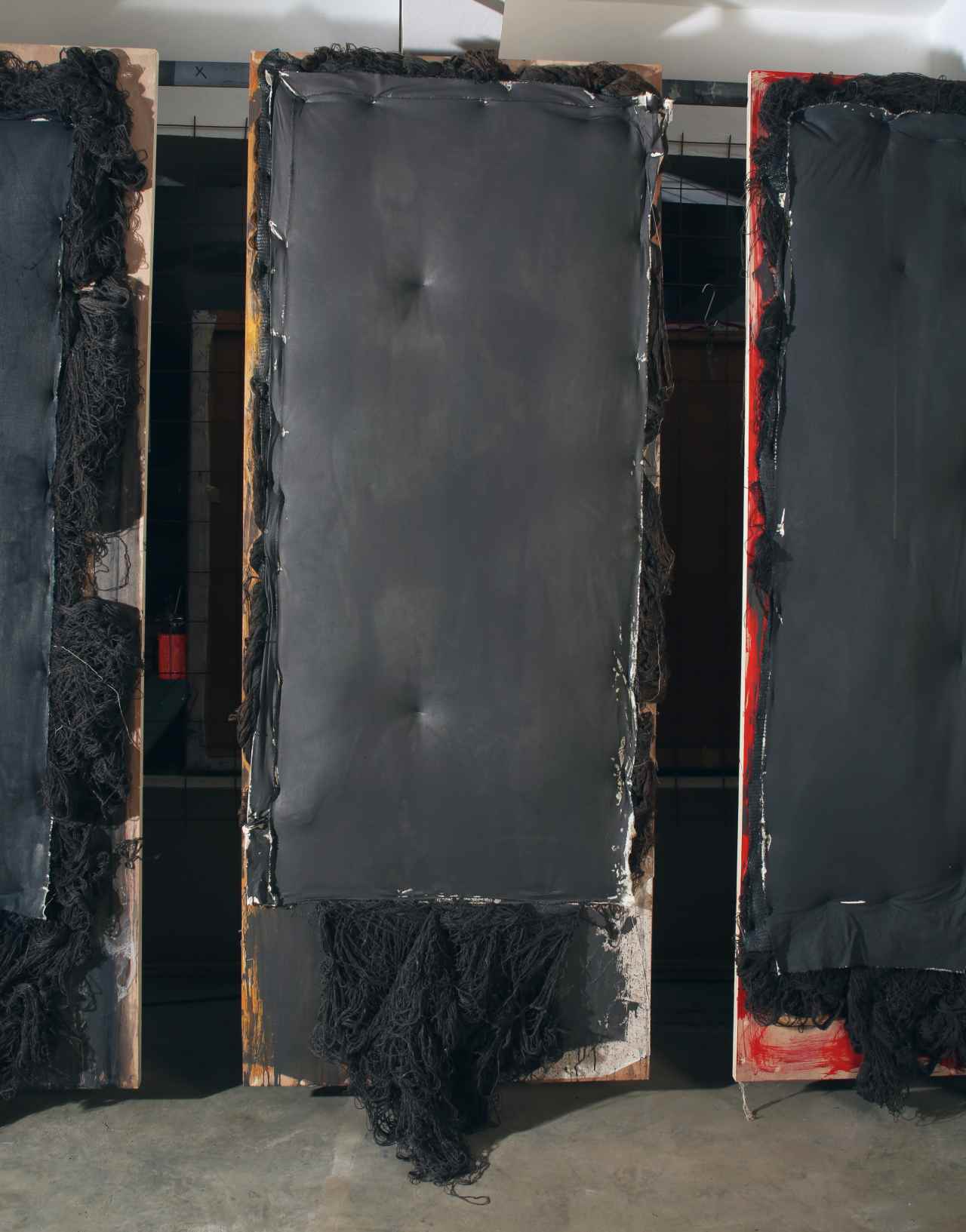
Both cycles draw on a method the artist developed and refined over years of working on the variations of the Rosary series. Rolls of wool and yarn are fixed onto wooden supports and then covered with canvas, pulled taut and secured to the base. The surface strains and pulses in uneven rhythms, and in places the buried material pushes out from beneath the edge, breaking the monochrome unity of the covering. Thematically, the works are close cousins to the Sharks cycle, united by shared concerns with storing and recycling. They are derived in part from the yarn left over after the close of the family manufacturing business, and though the works carry no explicit narrative, the presence of this inherited material endows them with the layered character of a self-referential palimpsest, one whose formal qualities suggest an emotional intensity held in tension with the conditions of existence.
The works of Rains Paris are dominated by a dark, near-absorptive black monochrome. Blackness in this context is not emptiness but a dense condition, saturated with the weight of matter and the sensation of moisture that has settled and will not lift. The title gestures towards a mood rather than a location: rain as a condition that lingers, pools and recurs. The surfaces appear tightly compressed, closed, almost oppressive, as though holding down something that strains to remain contained yet occasionally, and with great effort, forces its way into the light. The broad strokes of earthy transparent hues swept across the exposed lower areas of the base panel heighten the sense of drama, giving form to an inner tension, marked by melancholy and restraint.
Alba Albula follows the same methodological framework, but is transposed into a white register. The white employed here is far from neutral or pristine, it is layered, turbid and physical. There is a softness and airiness to the surfaces, but a fragility too. The relief of the stored material shows clearly through the white ground, while the textile fragments that emerge along the edges introduce notes of colour and the rich variety of the underlying material that is animated further by poured and spot-dripped paint across a vivid range of tones. If Rains Paris calls to mind the weight and darkness of night, Alba Albula suggests a daytime condition: a light that does not reveal but instead holds, envelops and brings to rest.
Together, the two cycles function as polarities: night and day, darkness and light. Yet in both cases the governing idea remains that of covering and withheld transformation. The transformation has been set in motion, but is deliberately arrested. It is in the decision not to complete the process, not to fully disclose the content, that the expressive power of these cycles resides. Rains Paris and Alba Albula do not offer legible scenes but rather an experience of duration, silence and tension, further suggested by the execution and presentation of individual painted sculptural collages in a continuous series. Observers are confronted with a monumental, composite surface that saturates the sense of sight and draws one into a space where the personal, the material and the symbolic converge into a layered meditation on the transcendence of existential trauma.
Written by: Lorena Šimić Majić