SHARKS
One of the defining threads running through the expansive and layered body of work of Dubravka Lošić is her treatment of her own practice as an open and mutable system. Individual cycles accrue meaning over time, re-enter circulation, and generate new spatial and conceptual configurations. Within such a continuum, the Sharks series marks a significant turning point, a move towards conceiving the work as a process of storage, stratification, and reactivation. Begun as early as 1986, this remarkably long-lived cycle extends across more than two decades. Its origins are practical: the need to manage the storage and repeated relocation of the studio and its contents through a succession of temporary spaces. In time, however, necessity is sublimated into method: storage becomes form, and displacement a mode of transformation.
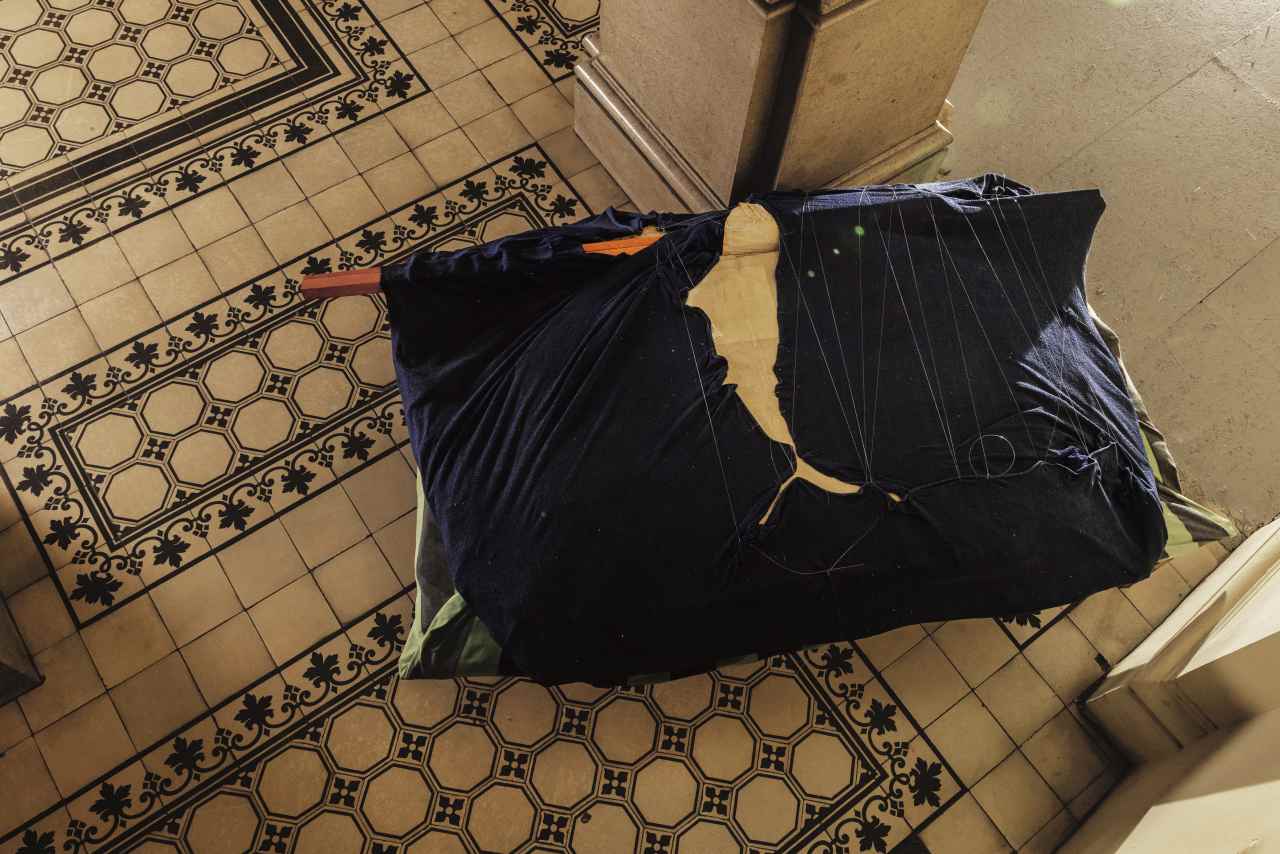
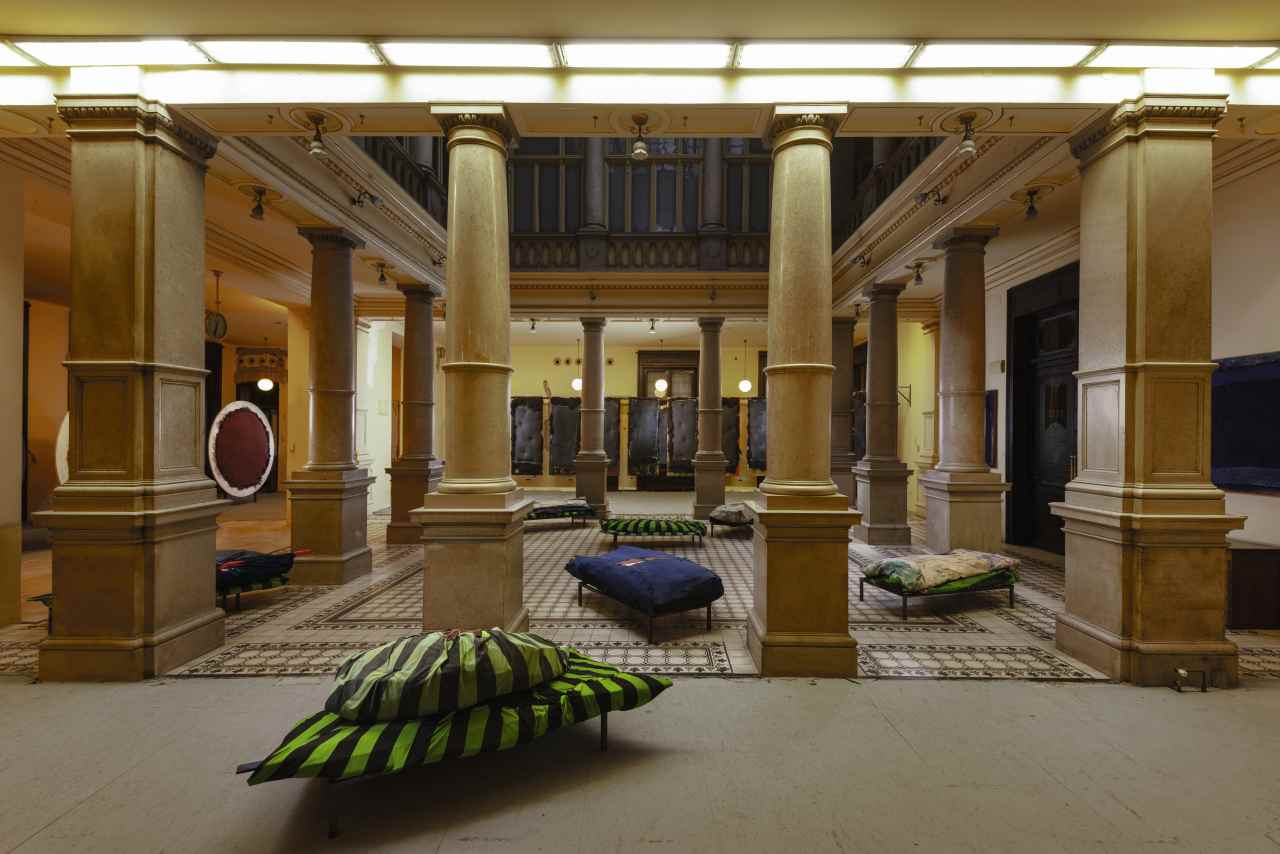
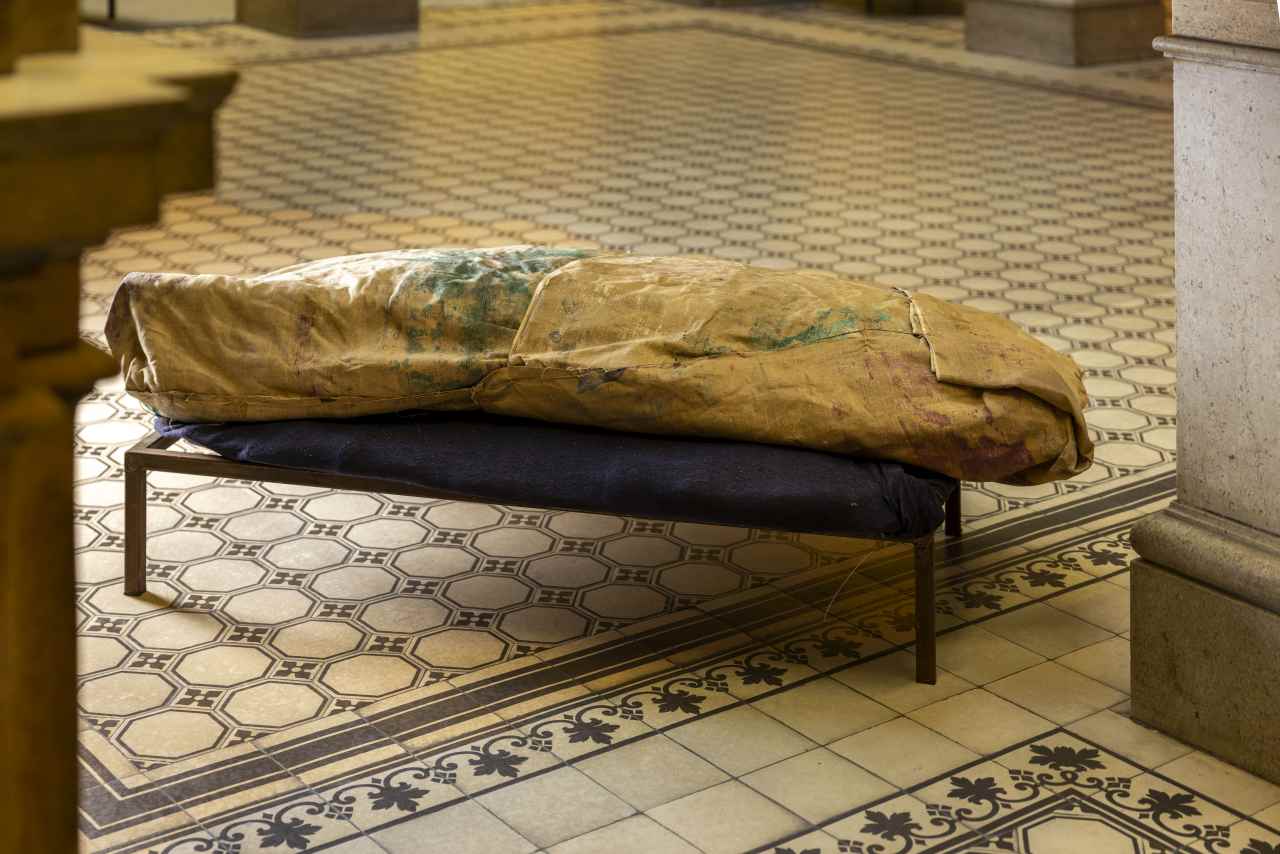
These are objects fashioned in fabric, often taking on voluminous, convulsed forms reminiscent of bodies, relics, or archival bundles. Textile, as the primary medium, operates on two levels at once: as a protective layer and as an active vehicle of meaning. The works migrate from the realm of the visible into the zone of the stored, whereupon the textile forms assume the role of a new structure. The material retains within itself the traces of previous states, compressing time and experience into a dense yet active whole.
Their placement in transitional spaces – atria, entrances, and thresholds – further underscores their liminal nature. In such configurations, Sharks function as a depot within the exhibition space. Storage and display proceed in tandem, governed by the same spatial logic, in which the covered works remain present as an active layer. This shift clearly articulates a postmodern paradigm of the work: the appropriation of one’s own body of work, the relinquishing of any notion of the finished object, and the constitution of the work as an open-ended process.
Sharks transcend the notion of a cycle, operating instead as a self-referential system through which the artist’s own body of work is continuously recycled and reshaped. Earlier works are integrated into new structures, where they persist in altered relations. The result is a layered and complex engagement with time and memory, one in which the past remains perpetually present, compressed within matter, ever available for reinterpretation.
Luciana Fuks