Tondo
The Tondo cycle comprises circular works of varying dimensions that may be understood both as the culmination of a prolonged exploration and transformation of the traditional painting towards the painting-object, and simultaneously as a step towards an ambient and spatial experience. The circle here does not appear as a decorative or symbolic motif in any narrow sense, but rather as a fundamental structure through which space, time, and matter are conceived.
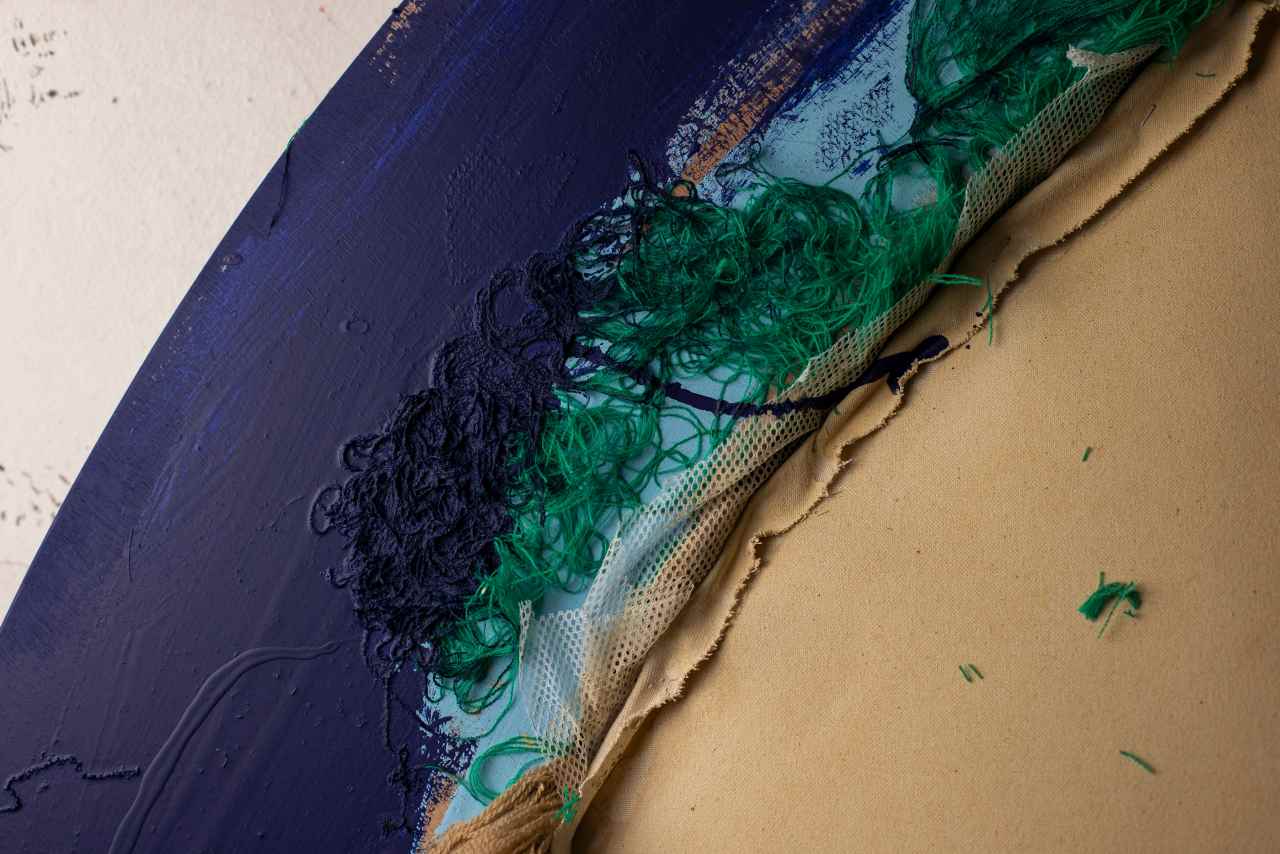
Dubravka Lošić’s execution process remains faithful to the methodology established in the earlier cycles Alba Albula and Rains Paris. Onto a wooden panel, the artist layers material appropriated from the legacy of her family’s manufacturing workshop, such as wool and yarn, before covering it with canvas in a process through which she achieves the intended form and tension. Beneath the surface, the material swells and strains, imparting a sense of latent energy and contained movement. The result is simultaneously compact and vulnerable, smooth and coarse, an organic membrane that conceals whatever stirs beneath it. The surface is closed yet far from still, concealing a process that has been set in motion but destined never to conclude. The yarn, though hidden beneath a compact monochrome surface, asserts a powerful presence through its insistent haptic suggestion, the organic tension of the form, and the controlled seeping along the edges beneath the rim of the covering canvas. The circular format intensifies this tension further. In the Tondo cycle, the circle calls to mind associations with the macro and the microcosmic, with planetary systems on the one hand, and the body’s interior processes on the other: the rhythms of breathing, the beating of the heart, the cyclical nature of life. At the same time, the circle is a form of closure and of boundary, it has neither beginning nor end, suggesting perpetual movement whilst equally implying the impossibility of escaping a closed system.
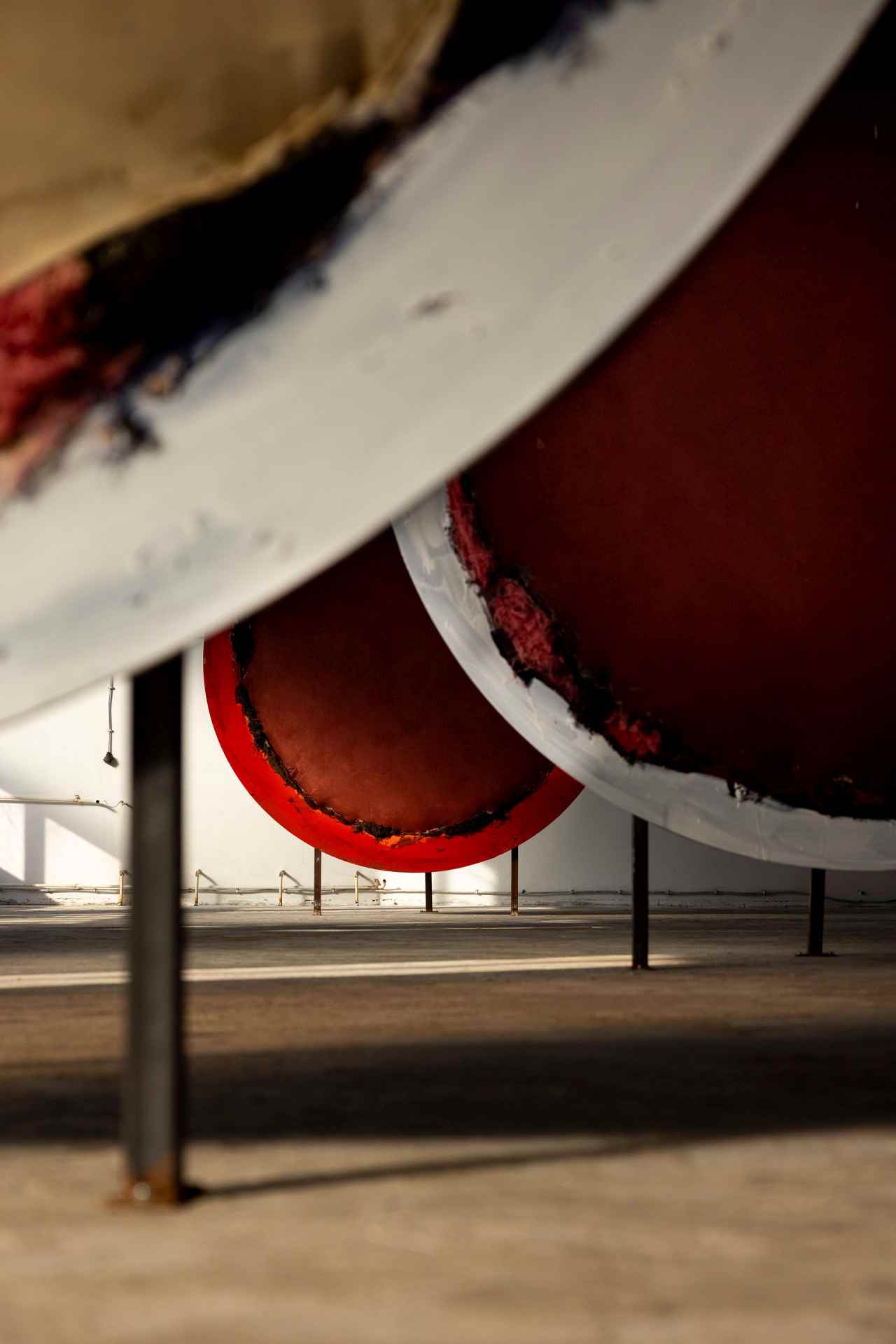
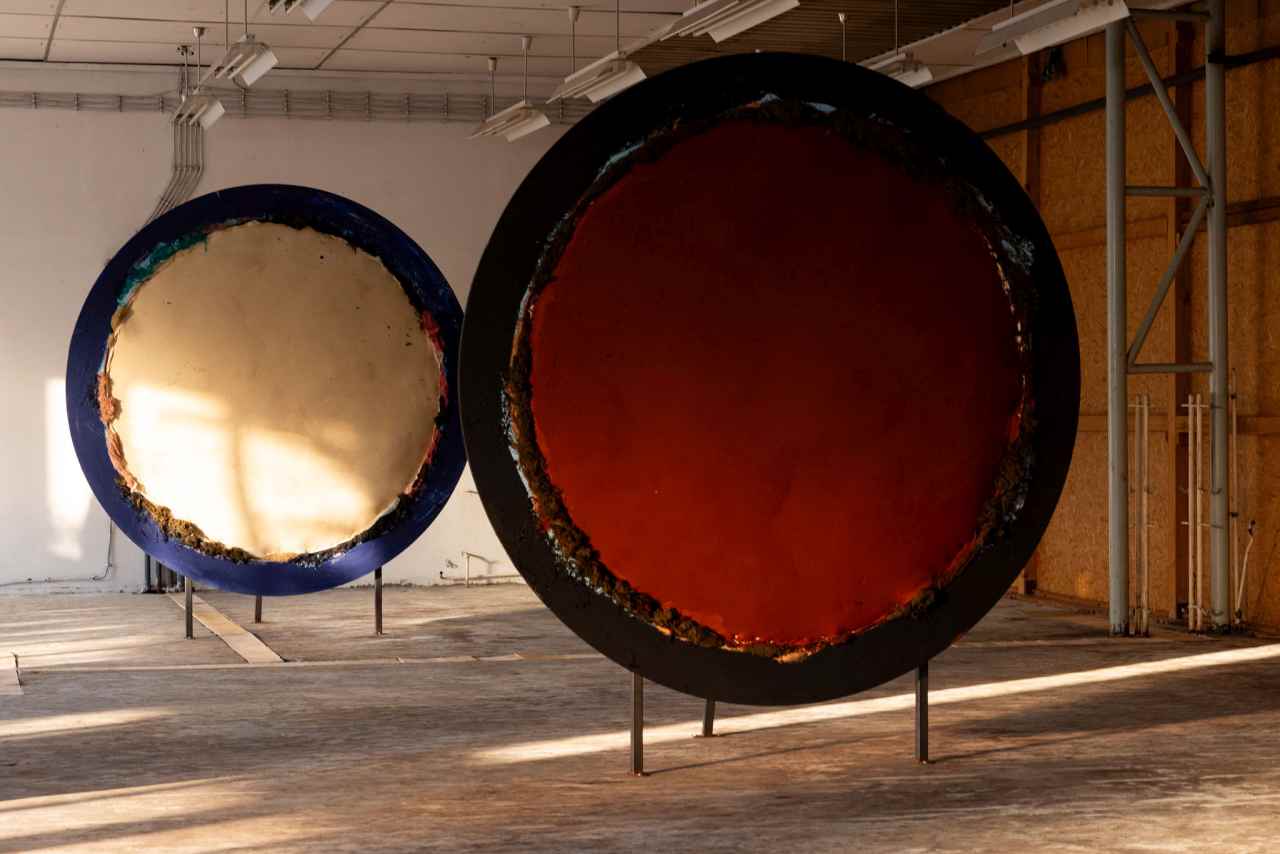
The spatial flexibility of the cycle is particularly noteworthy. The tondos may be hung on the wall or positioned on free-standing supports within the room, further eroding the boundary between painting and sculpture. In an ambient installation they function as self-contained bodies in space, objects that generate rhythm, establish scale, and create tension between themselves and the surrounding void. In confrontation with the architecture of the exhibition space, and especially in spaces dense with historical sediment, they appear at once contemporary and archaic, giving tangible expression to the Nietzschean concept of eternal recurrence.
For all their formal monumentality, these are reticent, almost meditative works, in which colour, matter, and form convey a sense of restraint, gravity, and impermanence. The tondos speak of a continuous dialogue between endurance and disappearance, as a metaphor for a reality that resists full interpretation yet presents itself, again and again, to be experienced anew.
Lorena Šimić Majić